
Laked Brucella Blood Agar (LBA) is intended for the isolation, quantitation, and partial identification of obligately anaerobic bacteria from clinical specimens. This medium will also support the growth of aerobic and microaerophilic bacteria if incubated in the proper conditions.
Laked Blood Agar – LBA
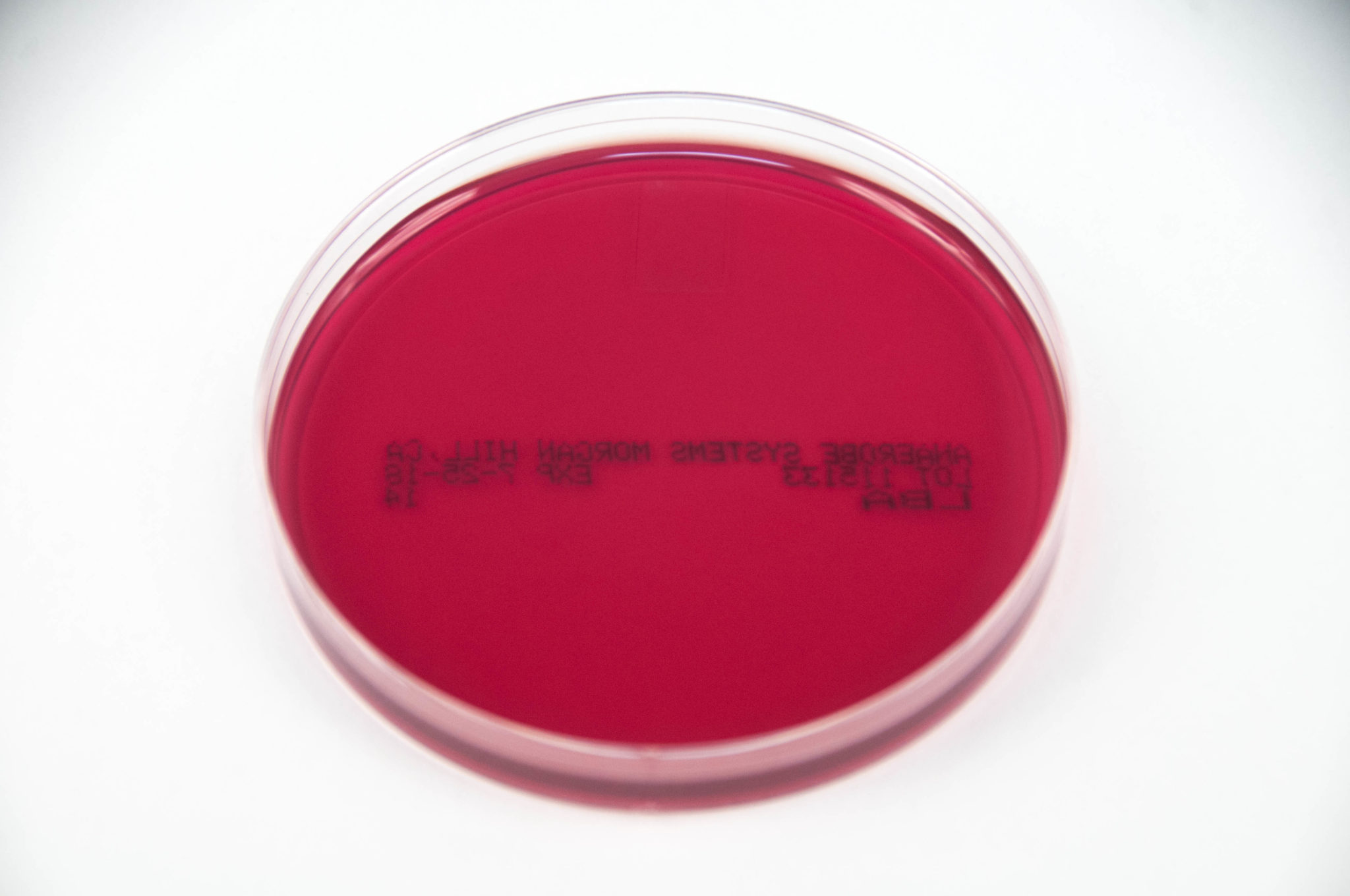
LBA Agar Plate
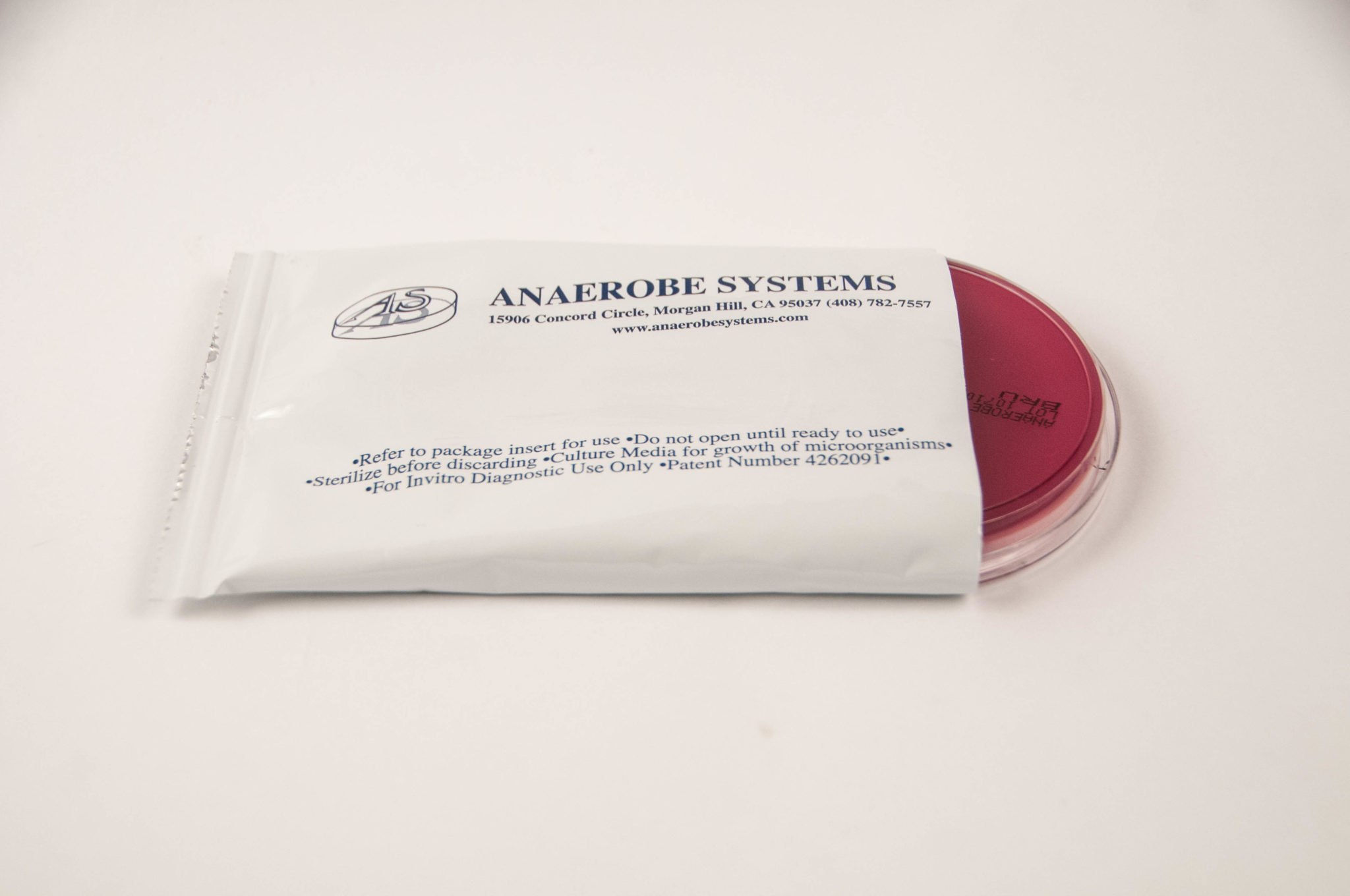
LBA Pack Open
| Catalog # |
Description |
Qty |
Price |
| AS-115 | LBA mono plate | 1 plate |
$4.67 |
Non-stock item:
100 pack minimum order, allow 2-4 weeks for delivery.
Product Description & Summary
LBA agar is an enriched, nonselective, and differential medium for the cultivation of obligate anaerobic bacteria. The nutritive base consists of casein, soy peptone, meat peptone, yeast extract, and dextrose. The medium is supplemented with hemin, vitamin K1, and laked sheep blood to enhance the recovery and pigment production of Prevotella and Porphyromonas spp. This medium is prepared, dispensed, and packaged under oxygen-free conditions to prevent the formation of oxidized products prior to use.
Interpretation of Results & Limitations
If used properly, LBA agar will support good growth of most obligate anaerobes found in clinical infections. This medium will support typical pigment production by Prevotella melaninogenica and Porphyromonas asaccharolytica.
LBA agar will not provide complete information for identification of bacterial isolates. Additional test procedures and media are required for complete identification. In some cases, LBA agar may be overgrown with swarming Proteus spp. or Clostridium spp. It is recommended that selective media such as Brucella Laked Blood Agar with Kanamycin and Vancomycin (LKV, catalog #: AS-112) and/or Brucella Blood Agar with Phenylethyl Alcohol (PEA, catalog #: AS-113) also be inoculated from clinical specimens to prevent such overgrowth and thus provide isolated colonies. Consult reference materials for additional information.
Quality Control
The following organisms are routinely used for quality assurance performance testing at Anaerobe Systems.
| Organism Tested | ATCC # | Results | Time | Special Reaction |
| Bacteroides fragilis* | 25285 | Growth | 24 hrs | |
| Prevotella melaninogenica* | 25845 | Growth | 24 – 48 hrs | Pigmentt |
| Porphyromonas asaccharolytica | 25260 | Growth | 24 – 48 hrs | Pigmentt |
| Fusobacterium necrophorum | 25286 | Growth | 24 hrs | |
| Fusobacterium nucleatum* | 25586 | Growth | 24 – 48 hrs | |
| Clostridium perfringens* | 13124 | Growth | 24 hrs | |
| Peptostreptococcus anaerobius* | 27337 | Growth | 24 hrs | |
| Staphylococcus aureus | 25923 | Growth | 24 hrs |
* Organisms specified by CLSI for quality control testing of anaerobic blood agars
t Pigment production may require longer than 48 hours incubation time
Product Storage & Shelf Life
Storage: Upon receipt, store at room temperature in original package until used. Avoid overheating or freezing. Do not use media if there are signs of deterioration (shrinking, cracking, or discoloration due to oxidation of media) or contamination. The expiration date applies to the product in its original packaging and stored as directed. Do not use product past the expiration date shown on the label.
Shelf Life: 90 days from date of manufacture.