
Formula
Proteose Peptone #2, 40.0
g
Sodium Phosphate dibasic, 5.0 g
Potassium Phosphate monobasic, 1.0 g
Sodium Chloride, 2.0
g
Magnesium Sulfate, 0.1
g
Fructose, 6.0
g
Horse Blood, 70.0
mL
Sodium Taurocholate, 1.0
g
Cycloserine, 250.0
mg
Cefoxitin, 15.5
mg
Agar, 15.0
g
Distilled Water, 1000.0
ml
Final pH 7.35 +/- 0.3 at 250C.
Final weight 17.0g +/- 1.7.
Precautions
For IN VITRO DIAGNOSTIC USE only. Approved biohazard precautions and aseptic
techniques should be observed when using this product. This product is for use only by properly-trained
and qualified personnel. Sterilize all
biohazard waste prior to disposal.
Storage and Shelf Life
Storage: Upon receipt, store at 2 – 8oC in original packaging until used.
Avoid overheating or freezing. Do
not use medium if there are signs of deterioration (shrinking, cracking or
discoloration due to oxidation of media) or contamination. The expiration date applies to the product in
its original packaging and stored as directed.
Do not use product past the expiration date shown on the container.
Shelf
Life: 90 days from date of manufacture at
2 – 8oC.
Procedure
Specimen Collection:
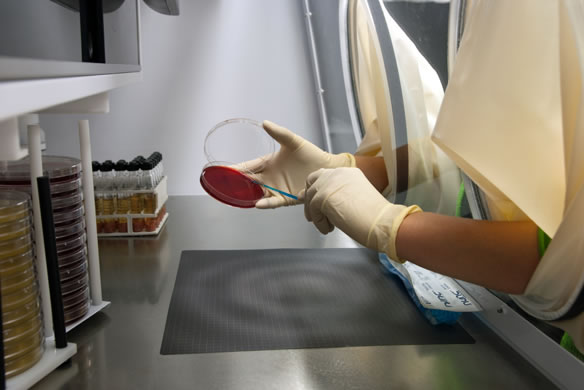
Specimens for anaerobic culture should be protected from air (oxygen)
during collection, transport and processing.
Consult appropriate references for detailed instructions concerning
collection and transport of anaerobes.
Methods for Use: CCFA-HT
should be inoculated directly with clinical material or a broth that has been
previously inoculated from clinical material.
Inoculated plates should be streaked to obtain isolated colonies and
immediately placed in an anaerobic atmosphere and incubated at 35-37oC
for 18-48 hours. Quantitation of C. difficile in a specimen may be clinically
useful, which can be achieved by thoroughly mixing a serial 10-fold dilution of
the specimen in an anaerobic environment followed by plating the dilutions onto
CCFA-HT media. Detailed instructions for
processing anaerobic cultures can be found in the appropriate references.
Materials Required But Not Provided
Standard
microbiological supplies and equipment such as loops, saline blanks, slides,
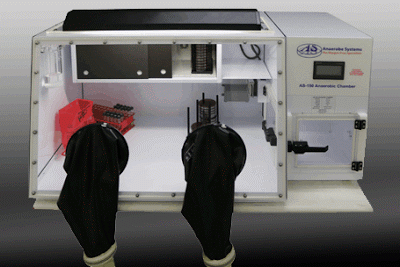
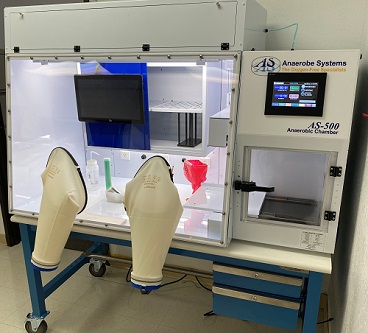
staining supplies, microscope, incinerator / autoclave, incubators, anaerobic
chamber, other culture media and serological and biochemical reagents.
Limitations
CCFA-HT will not provide complete information for
identification of bacterial isolates.
Rare strains of C. difficile
may be inhibited. Plates should be
examined no later than after 48 hours of incubation for optimal selectivity because
after 3 – 5 days of incubation significant numbers of colonies other than C. difficile may grow. At 48 hours, colonies of most other organisms
(e.g. Lactobacilli, Clostridia and
yeast), which may grow, are very small (pinpoint to 0.5 mm in diameter) and do
not fluoresce golden-yellow. A test for
aerotolerance should be used to confirm that each colony type is an obligate
anaerobe. Consult reference materials
for additional information.
Quality Control
CCFA-HT, if used properly, should support good
growth of species of C. difficile. After 24-48 hours, most colonies of C. difficile are large, grey, slightly
filamentous and low umbonate to flat. These
colonies fluoresce golden yellow/chartreuse under long-wavelength UV light.
The following organisms are routinely used for
quality control performance testing at Anaerobe Systems.
|
Organism Tested
|
ATCC #
|
Results
|
Time (Hours)
|
Special Reaction
|
|
Bacteroides fragilis
|
25285
|
No Growth
|
|
|
|
Enterococcus faecalis
|
29212
|
No Growth
|
|
|
|
Clostridium sporogenes
|
3584
|
No Growth
|
|
|
|
Clostridium beijerinckii
|
8260
|
No Growth
|
|
|
|
Proteus mirabilis
|
12453
|
No Growth
|
|
|
|
Clostridium perfringens
|
13124
|
No Growth
|
|
|
|
Clostridium innocuum
|
14501
|
No Growth
|
|
|
|
Clostridium sordellii
|
9714
|
No Growth
|
|
|
|
Clostridium difficile
|
9689
|
Growth
|
24
|
Yellow
|
|
Clostridium difficile
|
700057
|
Growth
|
24
|
Yellow
|
User
Quality Control: The final determination to the extent and quantity of user
laboratory quality control must be determined by the end user.
If
sterility testing is to be performed on this product, the appropriate
percentage of the original shipment amount should be incubated anaerobically
and aerobically for 48 – 96 hours.
If
the nutritive/inhibitory capacity of this medium is to be tested for
performance, it is recommended that the following ATCC organisms be evaluated
for growth/inhibition.
|
Organism
|
Expected Growth
|
|
B. fragilis
|
Inhibited
|
|
E. coli
|
Inhibited
|
|
S. aureus
|
Inhibited
|
|
C. difficile
|
24 hours
|
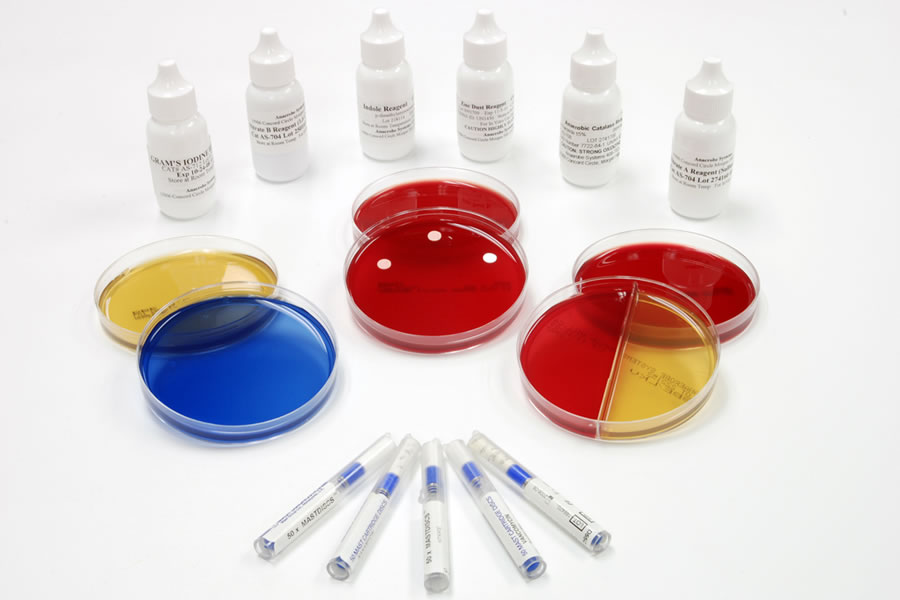
Physical Appearance: CCFA-HT should
appear opaque burgundy red in color.
References
1.
Dowell, V. R., Jr. and T. M. Hawkins.
1974. Laboratory Methods in Anaerobic Bacteriology. CDC
Laboratory Manual. USDHEW C. D. C.
Atlanta, GA 30333.
2.
Dowell, V. R., Jr. and G. L. Lombard.
1977. Presumptive Identification of Anaerobic Non-sporeforming Gram-negative
Bacilli. USDHEW, CDC. Atlanta,
GA 30333.
3.
Dowell, V. R., Jr., G. L. Lombard, F. S. Thompson and A. Y. Armfield. 1977. Media for the Isolation, Characterization,
and Identification of Obligately Anaerobic Bacteria. USDHEW, CDC, Atlanta, GA 30333.
4.
Holdeman, L. V., F. P. Cato and W. E. C. Moore. 1977. Anaerobe Laboratory Manual. Virginia Polytechnic Institute and State University. Blacksburg,
VA 24061.
5.
Jousimies-Somer, H. R., P. Summanen, D. M. Citron, E. J. Baron, H. M.
Wexler and S. M. Finegold. 2002. Wadsworth – KTL Anaerobic Bacteriology Manual. Star Publishing Co., Belmont, CA 94002.
6.
NCCLS. Quality Control for Commercially Prepared Microbiological Culture
Media; Approved Standard- Third Edition. (2004).
NCCLS document M22-A3. NCCLS, 940 West Valley Road, Suite 1400, Wayne, PA 19087-1898.
7.
George, W. L., V.L. Sutter, D. Citron, S. Finegold. 1979. Selective
and Differential Medium for Isolation of Clostridium
difficile. Journal of Clinical Microbiology.
9:214-219.
8.
Wilson KH, Kennedy MJ, Fekety FR: Use of Sodium Taurocholate to Enhance Spore
Recovery on a Medium Selective for Clostridium
difficile. Journal of Clinical
Microbiology 1982, 15(3): 443-446.
9.
Marler LM, Siders JA, Wolters LC, Pettigrew Y, Skitt BL, Allen SD: Comparison of Five Cultural Procedures for
Isolation of Clostridium difficile
from Stools. Journal of Clinical
Microbiology 1992, 30(2): 514-516.
10. Edelstein, Martha. “Isolation
and Identification of Clostridium
difficile; Tissue Culture and Cytotoxicity Assay.” Clostridium difficile: Its Role in
Intestinal Disease. Eds. Rolfe RD,
Finegold SM. San Diego:
Academic Press Inc, 1988.
287-307.