
Phenylethyl Alcohol Blood Agar (PEA) is an enriched selective medium used for the inhibition of facultative gram-negative rods and to inhibit the swarming of certain Clostridium species and Proteus species from clinical specimens.
Phenylethyl Alcohol Blood Agar – PEA

PEA Agar Plate
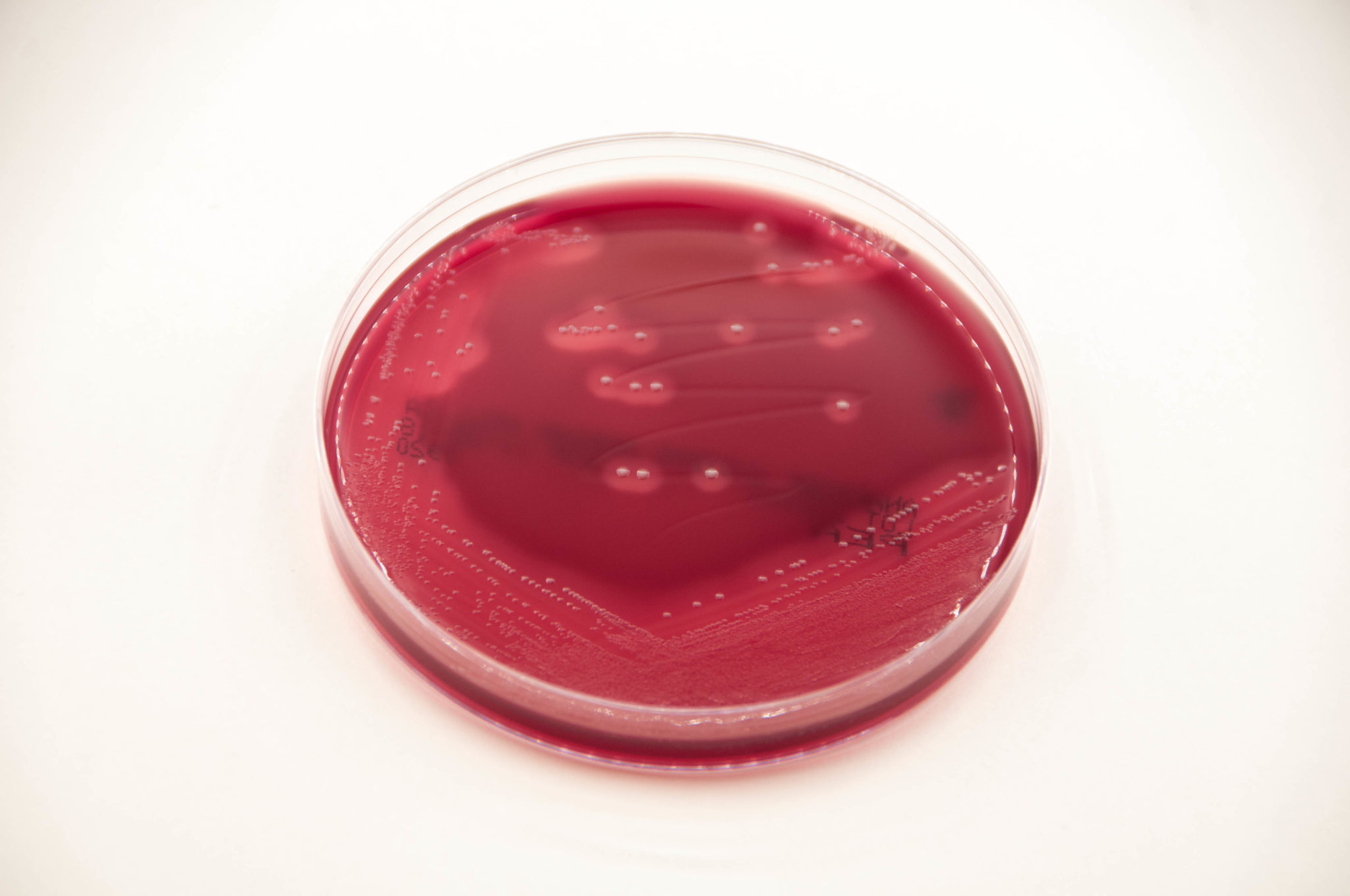
E. faecalis (ATCC 29212) Growing On PEA Agar Plate
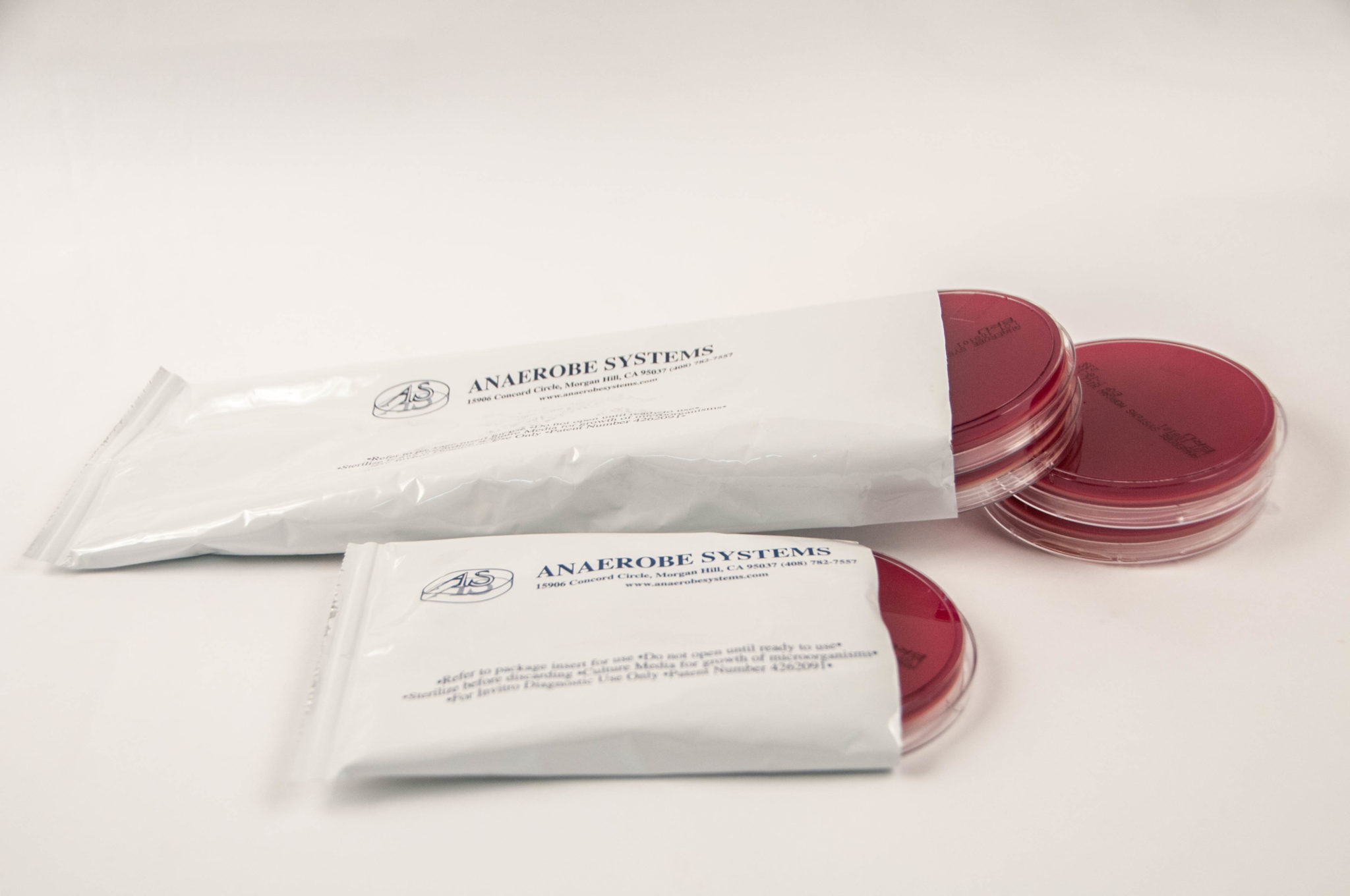
1 or 4 plates per package
| Catalog # |
Description |
Qty |
Price |
| AS-113 | PEA mono plate | 1 plate |
$2.88 |
| AS-143 | PEA mono plate | 4 plates |
$10.12 |
Product Description & Summary
PEA agar has a nutritive base that consists of casein, soy peptone, meat peptone, yeast extract, dextrose, hemin, and vitamin K1. The selective agent, phenylethyl alcohol, reversibly inhibits DNA synthesis and thus inhibits facultative anaerobic gram-negative bacteria such as those of the family Enterobacteriaceae. This medium will support the growth of most obligate anaerobic bacteria. Morphology of the colonies on PEA are similar to those found on enriched blood agar plates, like Brucella Blood Agar. PEA agar is especially useful in the selective isolation of anaerobes from mixed populations that contain rapidly growing gram-negative bacteria such as Proteus species. PEA agar inhibits the swarming by Proteus spp. and Clostridium septicum. This medium is prepared, dispensed, and packaged under oxygen-free conditions to prevent the formation of oxidized products prior to use.
Interpretation of Results & Limitations
If used properly, PEA will support good growth of most anaerobes found in clinical infections. PEA should inhibit the growth of facultative anaerobic gram-negative rods, like Escherichia coli and swarming of Proteus mirabilis.
PEA agar will not provide complete information for identification of bacterial isolates. Additional test procedures and media are required for complete identification. Some organisms that would normally grow on PEA agar may be inhibited. It is recommended that a non-selective medium, such as Brucella Blood Agar (BRU, catalog #: AS-111) also be inoculated from the same clinical specimen to assure recovery of all species present. Some strains of facultative organisms (which should be inhibited) may grow on PEA. A test for aerotolerance should be performed to confirm that each colony type is an obligate anaerobe. Consult reference materials for additional information.
Quality Control
The following organisms are routinely used for quality control performance testing at Anaerobe Systems.
| Organism Tested | ATCC # | Results | Time |
| Bacteroides fragilis | 25285 | Growth | 24 hrs |
| Prevotella melaninogenica | 25845 | No Growth | |
| Fusobacterium necrophorum | 25286 | Growth | 24 hrs |
| Fusobacterium nucleatum | 25586 | No Growth | |
| Clostridium perfringens | 13124 | Growth | 24 hrs |
| Peptostreptococcus anaerobius | 27337 | Growth | 24 hrs |
| Staphylococcus aureus or Enterococcus faecalis | 25923 29212 | Growth | 24 hrs |
| Escherichia coli | 25922 | Inhibited to No Growth | |
| Proteus mirabilis | 12453 | Inhibited to No Growth | |
| Propionibacterium acnes or Clostridium difficile | 6919 9689 | Growth | 24 – 48 hrs
24 hrs |
Product Storage & Shelf Life
Storage: Upon receipt, store at room temperature in original package until used. Avoid overheating or freezing. Do not use media if there are signs of deterioration (shrinking, cracking, or discoloration due to oxidation of media) or contamination. The expiration date applies to the product in its original packaging and stored as directed. Do not use product past the expiration date shown on the label.
Shelf Life: 90 days from date of manufacture.