Save The Date!


May 18th, 2012
Schneck Medical Center
Seymour, IN
 
May 30th, 2012
ATCC
Manassas, VA
 
July 19th, 2012
Wisconsin Veterinary Diagnostic Laboratory
Madison, WI
 
October 23rd, 2012
North Arkansas College
Harrison, AR
 
and 
July 11-13, 2012
October 10-12, 2012
January 9-11, 2013
Morgan Hill, CA 
 
For More Information 
or To Register Call:
1.800.443.3108

The Anaerobic Bacteriology Workshop Will Come To You!

Would you like to set up a workshop in your area?
Or Call Us At: 1.800.443.3108

Products‎ > ‎PRAS Transport Media‎ > ‎

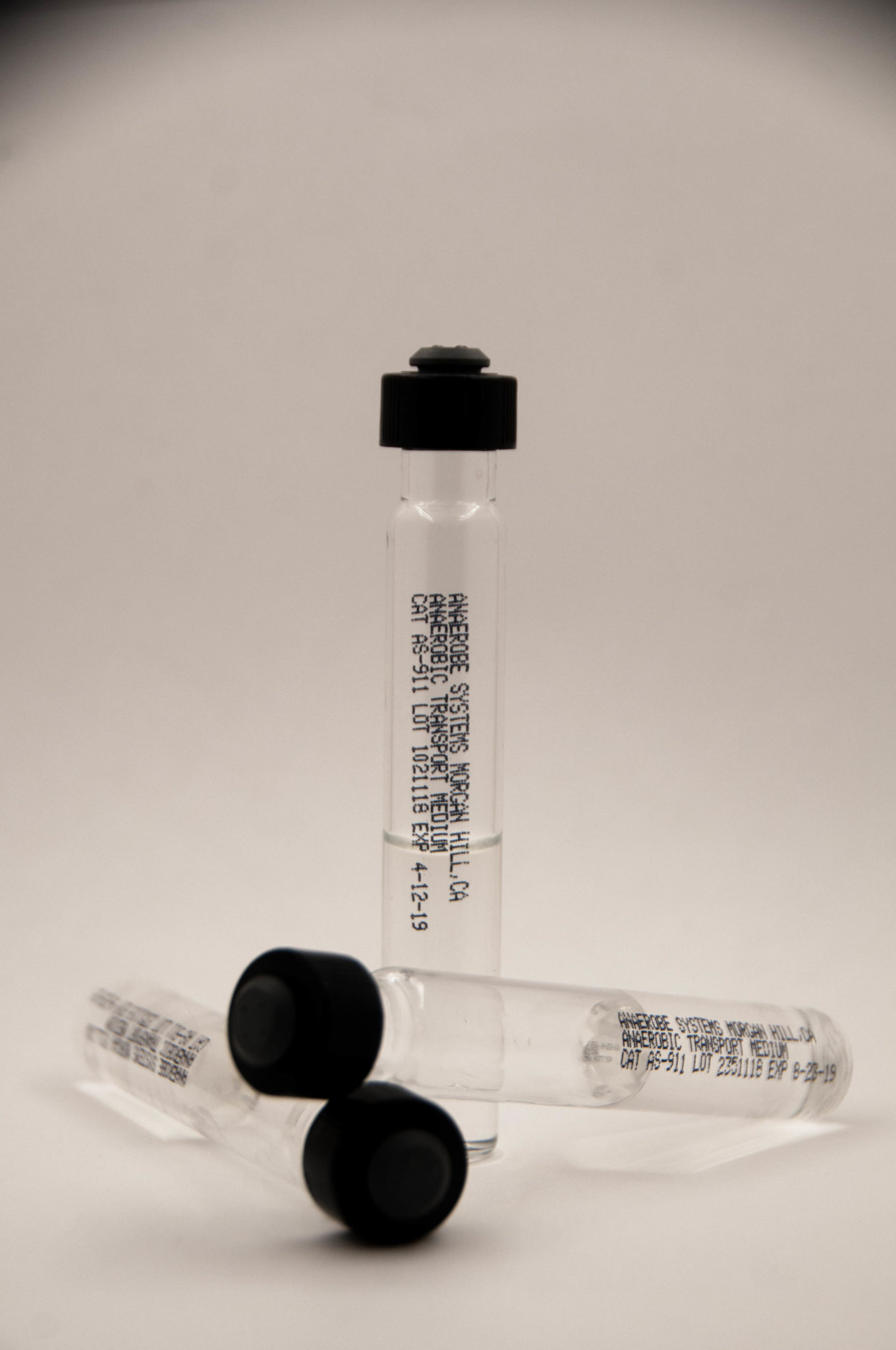
Anaerobic Transport Medium (ATM)

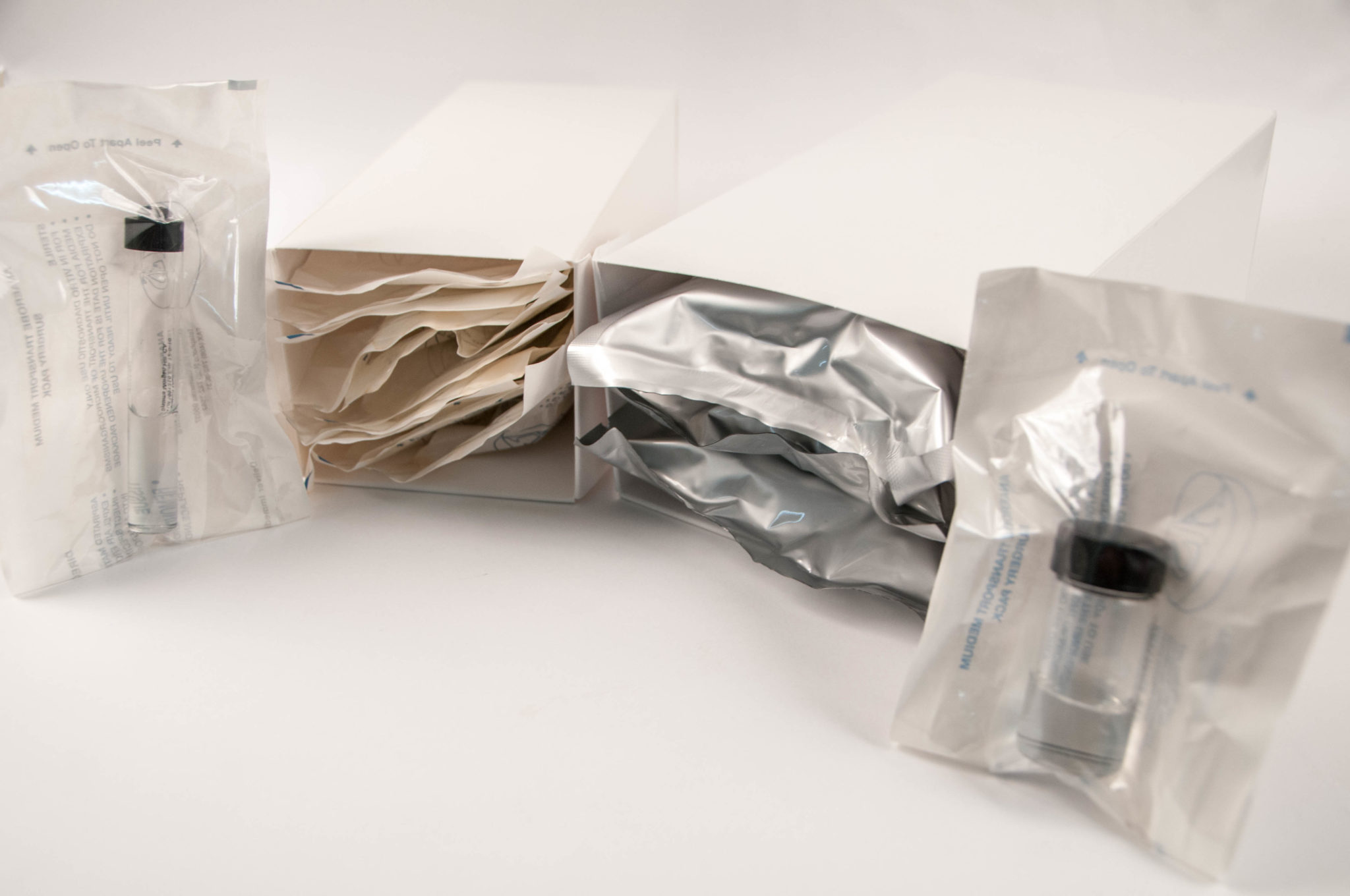
Anaerobic Transport Medium (ATM) is a mineral salt base semi-solid media with reducing agents designed as a holding medium for maintaining viability of microorganisms, especially anaerobic bacteria through collection, transport and shipment of clinical specimens. Anaerobic Transport Medium contains buffered mineral salts in a semi-solid media with sodium thioglycolate and cysteine added to provide a reduced environment. Resazurin is added as a redox indicator to reveal exposure to oxygen by turning pink. This product has been prepared to provide an environment, which maintains viability of most microorganisms without significant multiplication and allows for dilution of inhibitors present in clinical material. This medium is designed to meet the stringent viability requirements of obligate anaerobes. All items are supplied with screw caps containing rubber septa (Hungate caps), which allows for either direct injection of aspirated clinical material or introduction of tissue samples. This medium is prepared, dispensed and packaged under oxygen-free conditions to prevent the formation of oxidized products prior to use.

   Anaerobe Systems PRAS Anaerobic Transport
                        Media (ATM) AS-911

 
View the full product insert: ATM Insert.pdf

Anaerobic Transport Product

Item #
 
Description
 
Size
 
Price
 

AS-911

ATM 6.0mL

10 tubes/pack

17.45


Formula

Sodium Thioglycollate, 1.0 g

Sodium Phosphate, dibasic, 1.15 g

Sodium Chloride, 3.0 g

Potassium Chloride, 0.2 g

Potassium Phosphate, monobasic, 0.2 g

Magnesium Sulfate, heptahydrate, 0.1 g

L-Cysteine, 1.0 g

Resazurin, 1.0 mg

Gelrite, 4.0 g

Distilled Water, 1000.0 ml


Final pH 7.3 +/- 0.2 at 25 degrees C.

Final Volume 6.0 ml +/- 0.6.


Precautions

For IN VITRO DIAGNOSTIC USE only.  Approved biohazard precautions and aseptic techniques should be observed when using this product.  This product is for use only by properly trained and qualified personnel.  Sterilize all biohazard waste prior to disposal.


Storage and Shelf Life

Storage:  Upon receipt store at room temp, in original packaging until use.  Avoid overheating or freezing.  Do not use medium if there are signs of deterioration (discoloration or evaporation), oxygen exposure or contamination.

The expiration date applies to the product in its original packaging and stored as directed.  Do not use product past the expiration date shown on the container.

Shelf Life: 1 year from date of manufacture.                            


Procedure

Specimen Collection:  Specimens for anaerobic culture should be protected from air (oxygen) during collection, transport and processing of specimens.  Consult appropriate references for detailed instructions concerning collection and transport of anaerobes.

Methods for Use: Anaerobic Transport Medium is suitable for use as a transport and holding medium for clinical specimens collected as tissue samples or fluid specimens aspirated into syringes.  With any clinical specimen, Anaerobic Transport Medium should be inoculated by aseptic technique immediately at or after collection.  For tissue samples, open tube by screw cap and place tissue on the surface of the semisolid medium, inserting the tissue into the agar column is not necessary.  Immediately close tube.  Contact with air of tube contents should be minimized.  For syringe specimens, the rubber septum in the cap should be disinfected and the fluid specimen directly injected into the tube at a slow rate.  Once inoculated, keep at room temperature and deliver to the laboratory for processing as soon as possible.  Swabs are not recommended for use as anaerobic specimen collection devices, however this medium can accommodate swabs, if necessary.  Detailed instructions for processing anaerobic cultures can be found in the appropriate references.


Materials Required But Not Provided

Standard microbiological supplies and equipment such as loops, paper points, disinfectant, syringes with needles, sterile forceps, saline blanks, slides, staining supplies, microscope, incinerator/autoclave, incubators, anaerobic chamber, other culture media and serological and biochemical reagents.


Limitations

Anaerobic Transport Medium is designed as a holding medium to maintain viability of microorganisms contained within a specimen during transport.  This medium will not provide complete information for identification of bacterial isolates.  Additional test procedures and media are required for complete identification.  Specimens should be transported and processed in the laboratory in a timely manner, since delay may result in overgrowth by one organism present in a specimen from polymicrobic infections.  Consult reference materials for additional information.


Quality Control

If used properly this medium should maintain the viability of microorganisms present within a clinical specimen until transported and processed within the laboratory.

The following organisms are routinely used for quality assurance testing at Anaerobe Systems.  For determining the holding capacity of Anaerobic Transport Medium for each isolate listed below, an ATCC strain, from 24-hour growth, is inoculated into the media aerobically and held overnight.  In an anaerobic environment, each organism is streaked, onto Anaerobic Brucella Blood Agar, to obtain isolated colonies.  Plates are incubated for 35 –37oC for 48 hours and growth is observed.

Organism Tested

ATCC #


Results

Time (Hours)

Bacteroides fragilis

25285

Growth

24 h

Porphyromonas levii

29147

Growth

24 – 48 h

Bacteroides vulgatus

8482

Growth

24 h

Fusobacterium nucleatum

25586

Growth

24 h

Fusobacterium necrophorum

25286

Growth

24 h

Clostridium perfringens

13124

Growth

24 h

Clostridium novyi

7659

Growth

24 – 48 h

Peptostreptococcus anaerobius

27337

Growth

24 h


** For AS-911 the following organisms are used:

Propionibacterium acnes

6919

Growth

24 – 48 h

Staphylococcus aureus

25923

Growth

24 h


 User Quality Control: The final determination to the extent and quantity of user laboratory quality control must be determined by the end user.

If sterility testing is to be performed on this product the appropriate percentage of the original shipment amount should be incubated anaerobically and aerobically for 48 – 96 hours.

If the holding capacity of this medium is to be tested for performance, it is recommended that the following ATCC organisms be evaluated for growth.


Organism

Growth in


Hours

B. fragilis

24 hrs

P. levii

48 hrs

C. perfringens

24 hrs

F. necrophorum

24 hrs

S. aureus

24 hrs


Physical appearance:  Anaerobic Transport Medium should appear as a clear translucent semi solid media.


References

1.    Dowell, V. R., Jr. and T. M. Hawkins. 1974. Laboratory Methods in Anaerobic Bacteriology.  CDC Laboratory Manual. USDHEW C.D.C. Atlanta, GA 30333.


2.        Dowell, V. R., Jr. and G. L. Lombard. 1977. Presumptive Identification of Anaerobic Non-spore forming Gram-negative Bacilli. USDHEW, CDC. Atlanta, GA 30333.


3.        Dowell, V. R., Jr., G. L. Lombard, F. S. Thompson and A. Y. Armfield. 1977. Media for the Isolation, Characterization and Identification of Obligately Anaerobic Bacteria. USDHEW, CDC, Atlanta, GA 30333.


4.        Engelkirk, P. G., Duben-Engelkirk, J. and Dowell, V. R. 1992. Principles and Practices of Clinical Anaerobic Bacteriology. Star Publishing Co., Belmont, CA 94002.


5.        Holdeman, L. V., F. P. Cato and W. E. C. Moore. 1977. Anaerobe Laboratory Manual.  Virginia Polytechnic Institute and State University. Blacksburg, VA 24061


6.        Jousimeis-Somer, H. R., Summanen, P., Citron, D. M., Baron, E. J., Wexler, H. M. and S. M. Finegold. 2002. Wadsworth – KYL Anaerobic Bacteriology Manual. Star Publishing Co., Belmont, CA 94002.


7.        QA for commercially prepared microbiological culture media – Second Edition; 1996 Approved Standard.  NCCLS document M22-A2.  NCCLS, 940 West Valley Road, Suite 1400, Wayne, PA 19087-1898.